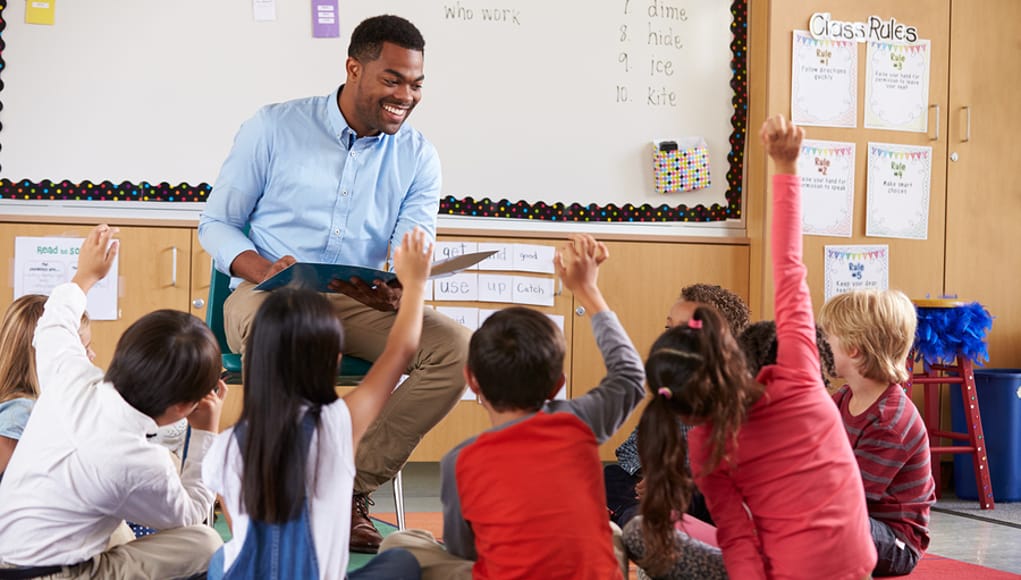
Our students spend between 30-40 hours a week in our care. It is no surprise that our words and our actions have the power to profoundly impact their self-acceptance, mindset, and empathy for those around them. We have sizable influence over not just what our students learn as acceptable norms, but who they aspire to be in their world. In our current socio-political environment, they are watching us intently to see how we interact with people unlike ourselves, how we advocate for underrepresented populations, and seek equity for adults and children in our school community.
 We all aspire to be the best we can be for our students. Yet, all of us possess unsurfaced biases and gaps in knowledge that can prevent us from being the most effective role models we can be. And, our school institutions have built-in racial, ethnic, economic and ability biases that handicap students of color, students with special learning needs, students who are newcomers to our country, and students who identify as LBGT, to name a few. For example, students of color nationwide, are more likely to be disciplined – and disciplined more harshly – than their peers. *Eighty Four percent of LGBT youth report verbal harassment at school because of their gender identity and/or sexual orientation. ** And, findings indicate that, across all the grade levels and content areas, teachers had lower perceptions of the academic skills and knowledge of those students who were classified as English-learners. *** Our schools, unfortunately, mirror the injustices of the greater community. As a result, many students that fall outside of narrowly defined norms are vulnerable to feeling marginalized, and being unable to access in full, the educational opportunities to which they are entitled.
As educators, it is our responsibility to surface our own unintended biases, and acknowledge and mitigate against the institutional biases and stereotypes that compromise students’ emotional safety and access to educational resources.
Two simple ways to begin advocating for equity:
#1: Explore educational resources such as “Embrace Race,” “Facing History and Ourselves” and “Learning for Justice,” or viewing TED Talks such as “The Danger of a Single Story by Chimamanda Ngozi Adichie and “How to Raise a Black Son in America” by Clint Smith.
#2: Consider your own “Bias Biography,” by asking: “What has my life experience been with____________ that drives my conscious and unconscious decision making? The “blank” could be race, physical appearance, religion, nationality, disability, gender identification, sexual orientation to name a few. Depending on the adult culture of your school, this activity can be shared in small groups safely when conversation norms are agreed upon and held to with fidelity.
At the institutional level, it is essential that we collect and analyze data that can uncover inequity in our schools. Attendance data, student and staff perception data, behavior and discipline data, program data, assessment data and grades should all be disaggregated as appropriate and rigorously analyzed for patterns of inequity and bias. The process of problem identification and designing solutions must include diverse stakeholders, including students, families, staff and community members.
A sense of safety, belonging, and relationship is the plate on which learning sits. Given the racial and economic inequities illuminated by the pandemic, and recent national news, attention has been brought to the rise in racially and ethnically motivated crimes, antisemitism, legislation limiting the rights of the GBLT community, and what history we can teach. It is imperative that as educators, we aggressively pursue our own learning around these issues, so that we can serve our students through a lens of knowledge and empathy. Our students need to see us explicitly working towards justice for all vulnerable populations in our school communities. Through these efforts, we model compassion and advocacy, and we create an equitable, safe and empowering learning environment.